NYS Firefighter Test Practice
If you’re interested in becoming a New York State Firefighter, it’s important to be physically fit, have strong teamwork and communication skills, and be able to work well under pressure. A successful candidate for a firefighter position should also be committed to public service and willing to make sacrifices to help others in need.
To begin the process of becoming a New York State firefighter, you’ll need to apply to take the firefighter exam. There is no formal training before you take the written exam because the exam is not meant to test your physical abilities or knowledge of the job.
Research the fire department: Before your interview, take some time to research the fire department and understand its mission, values, and priorities. This will show the interviewer that you are interested in the department and that you are prepared for the interview.
Apply
The New York State firefighter exam is typically offered every four years, meaning you have plenty of time to prepare. Once you pass the written test, you also must do an in-person interview with the fire department.
After you’ve passed the written exam, you are only considered a firefighter applicant. Once you’re hired, you’ll also need to complete a Certified First Responder with Defibrillation Certificate by the end of your probationary period.
But first, let’s focus on the exam.
Preparing for the exam
The New York State (NYS) Firefighter Exam is designed to evaluate the skills and abilities necessary for a successful career in firefighting. Here are the key topics covered in the exam:
1. Ability to Learn and Apply Information
- This section starts with a written training lesson. Candidates are given time to read the material before answering questions related to it. The questions assess the ability to recall and apply the information presented in the training lesson. No prior knowledge of firefighting is required as all necessary information is included in the lesson
2. Basic Arithmetic
- This portion tests your aptitude for basic mathematical operations such as addition, subtraction, multiplication, and division. It may also include working with tables and interpreting data. Candidates are allowed to use a calculator (excluding cell phone calculators) for this section
3. Reading Comprehension
- Candidates will be given short passages to read, followed by multiple-choice questions. These questions require candidates to extract information, make inferences, and draw conclusions based on the text. The goal is to evaluate how well candidates understand and interpret written information
4. Situational Judgment Test (SJT)
- The SJT presents various scenarios that a firefighter might encounter on the job. Candidates must choose the most effective responses to these situations. This section tests decision-making skills, ethical reasoning, and practical judgment. It’s crucial for assessing how candidates would handle real-life challenges in the field
5. Memorization, Visualization, and Spatial Orientation
- These cognitive abilities are crucial for tasks such as remembering complex procedures, visualizing scenes, and understanding spatial relationships. Questions may involve memorizing details from images or diagrams, visualizing objects from different perspectives, and determining spatial orientations
6. Written Expression and Information Ordering
- Written expression tests your ability to communicate effectively in writing. Information ordering evaluates your ability to arrange things or actions in a certain order according to a specific rule or set of rules. These skills are essential for writing reports and following procedural guidelines
7. Problem Sensitivity, Deductive Reasoning, and Inductive Reasoning
- Problem sensitivity involves recognizing potential issues or identifying when something is wrong. Deductive reasoning tests the ability to apply general rules to specific problems to come up with logical solutions. Inductive reasoning involves combining pieces of information to form general conclusions or solutions. These skills are critical for making quick and accurate decisions during emergencies
Start practice today and improve your hiring chances
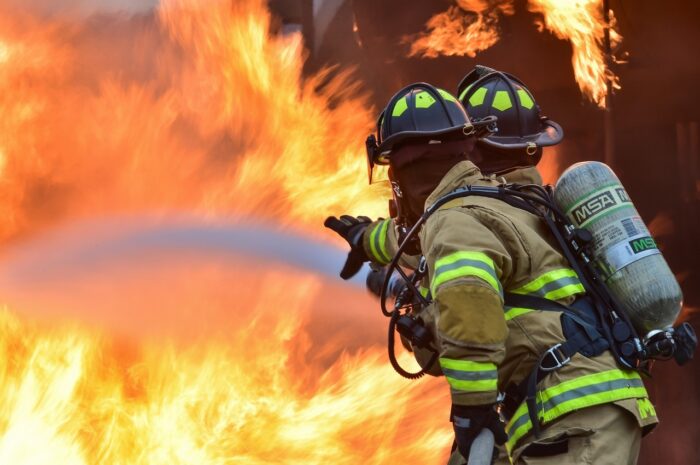
The New York State Firefighter position is a physically and mentally demanding role that requires individuals to respond to emergency situations and work as part of a team to control fires, provide medical assistance, and help keep communities safe. Some of the key responsibilities of a New York State Firefighter may include:
- Responding to emergency calls: Firefighters must be able to respond quickly and effectively to emergency calls, including fires, medical emergencies, and hazardous material incidents.
- Operating firefighting equipment: Firefighters must be skilled in using firefighting equipment, such as hoses, ladders, and fire extinguishers, to control fires and rescue people from burning buildings.
- Providing medical assistance: Firefighters may be called upon to provide basic medical assistance, such as administering CPR or treating burns, in addition to their firefighting duties.
- Maintaining firefighting equipment: Firefighters must ensure that their equipment is properly maintained and in good working order at all times.
- Participating in training: Firefighters must participate in ongoing training to keep their skills up-to-date and improve their ability to respond to emergencies.
- Working as part of a team: Firefighting is a team-based profession, and firefighters must be able to work effectively with others to control fires, provide medical assistance, and keep communities safe.